
• Life
  • Novels
    • Novels Home
    • Freud, a Novel
    • Who Was That Lady?
    • Justice
    • Dog’s Mercury
    • The Heart Beneath Quartet
      • Richard’s Feet
      • Cley
      • Egon
      • How to Push Through
  • Plays
    • Plays Home
    • New Short Plays 1 & 2
    • A Suffolk Trilogy
    • From the Lion Rock & The Sea Voyage Trilogy
  • Opera
  • Photo Gallery
  • Diaries
    • The City and the Country
    • Bike Odyssey 2014
  • Contact

Carey Harrison

The City & the Country no. 16 – August 13 2014

Da PO-lice

Da PO-lice

Josip at work
Josip at work

"My BEST friend!"

“My BEST friend!”

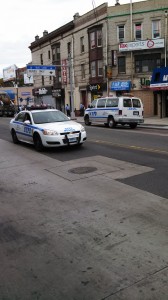
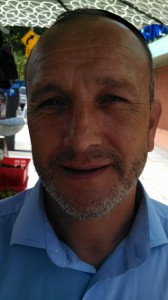
Wednesday once more. En route to the subway, police in attendance, and my friend Josip the Turkish fruit seller (My BEST friend! as he exclaims on seeing me, but presumably to dozens of others too), along with, Where you BEEN? – I fall for this every time, explaining to him that I have been nowhere, before eventually realizing he also says this to everyone and means nothing by it. Perhaps in Turkish it simply means, How ya doin? – words I also slavishly answer when addressed to me, as though they were a real enquiry.

Moby (not shown)

Moby (not shown)

Linda and Princess

Linda and Princess

En route to Linda and Princess and coffee, I greet another urban regular, Moby – not his real name (it’s not Dick, either), which like his face, he prefers me not to disclose – one of the joys of my Wednesdays. Moby is the most dynamic human being I know. He hands out free newspapers, which he will not permit me to identify, with a tireless enthusiasm that lights up your day. He will succeed at whatever he does in this life. He’s a beacon. You could run Manhattan’s electrical grid off him.

Filed Under: Post, The City and the Country

The City and the Country no.15 – August 9 2014

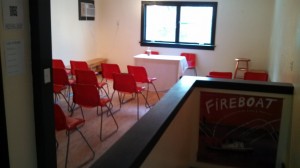
The upstairs room before the launch

The upstairs room before the launch

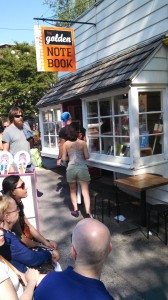
The Golden Notebook bookstore
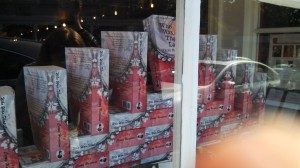
The Golden Notebook bookstore

Book launch – of the most modest but delightful kind – went off well, and everyone ‘seemed buoyant and glad,’ wrote Billie Chernicoff, wonderful poet with whom I share a publisher. Just so. I read a short section of humorous plot, then a long riff, the ‘bowel-epic’ meditation on digestive therapies, which I hadn’t read (except to proof-read) since I wrote it 9 years ago, and had no memory of what it said. Terrific fun to read cold – the best way, for me – and re-discover what seemed to be an author on a roll, apparently knowing exactly where he was going when I’m quite sure I had no idea at the time. The book is a little like several hundred consecutive hands of Solitaire (Patience as the British call it), each one of which ‘comes out’ – impossibly against the odds, and a little like the opening of Tom Stoppard’s Rosencrantz and Guildenstern are Dead, with its seemingly unending coin-tosses coming up ‘Heads!’

Pyramid of 'That Lady' copies in the window

Pyramid of ‘That Lady’ copies in the window
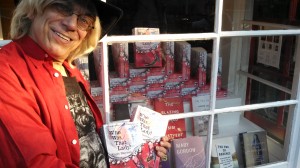
My dear friend John Farrell outside the bookstore window crammed with copies
My dear friend John Farrell outside the bookstore window crammed with copies

How could I have been in such a serendipitous state of grace when I wrote the book – and not know it? But perhaps that’s the point. If you become aware of it, the state of grace is gone. My friend the film-maker Russell Richardson asked – as he has in the past – a sweet question (like the other questions it was a soft toss of the kind you expect in a home run derby), wondering whether I had been aware of the spirit of Flann O’Brien as I wrote the book. I could not in my most extravagant dreams claim to have been channelling F O’B, though I saw Russell’s point, in that, like O’Brien, I seemed to be attempting to render rational the most impossible premises, one after another. I said in reply that I felt all story-telling was a little like that – you set yourself the most improbable challenge (since reality, the thing you’re seeking to evoke, is itself improbable beyond all calculation) and try to lassoo it, rein it in, domesticate it, and make it trot to your tune.

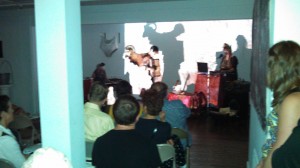
A dirge of Goths

A dirge of Goths

After the reading/launch we went off to Athens, where the gallery hosting the ‘roadkill’-art exhibition, including Claire’s Rock, Paper, Scissors II with its myriad cranes, was holding a closing party. There we were serenaded by the Dust Bowl Fairies, ironic goth environmentalists with a gift for repetitive dirges and an aesthetic borrowed, as Claire pointed out, from Lori Anderson. Cheeses and a chance once more to study Claire’s work, and others’, made up for it.

Filed Under: Harley-Davidson, Post, The City and the Country, Theatre, Travel, Writing

The City & the Country no.14 – August 7 2014

Life on the bench

Life on the bench

One of my pals on the all black armed college security squad is talking to a friend. As I greet them, the friend says, “I figure you for a former hippie.” How so? I enquire. My beard is trimmed, I’m wearing black slacks, business shirt. “I don’t know,” he muses, “but I see you… you know, Woodstock and all that…” “I live in Woodstock,” I tell him. “You see?” he cries. “Hire this man,” I tell the armed guard. “He’s psychic.” Out in Flatbush I find a new story on the bench I’ve been chronicling (see previous updates). The building behind it used to be a bank; it’s being renovated for some other service industry, using non-union labor. Hence the protest.

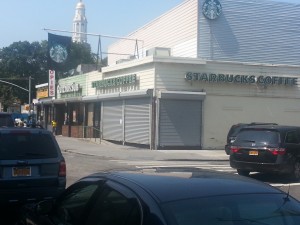
Dead college Starbucks - (is this the END?)?

Dead college Starbucks – (is this the END?)?
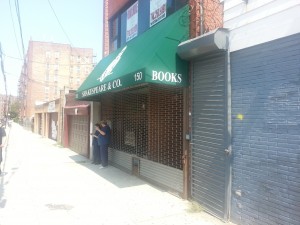
Dead college bookstore, once a mainstay, now it's all done online

Dead college bookstore, once a mainstay, now it’s all done online

A lot of things seem dead or dying, here outside the campus as elsewhere in America. Dead bookstore, once a big part of campus life (I went in there last year, puzzled by the absence of customers; a store assistant said the students come in, puzzled, say “Is this a library?” Goodbye bookstores. Goodbye libraries, soon.) Dead Starbucks? Yikes! Let’s hope they’re just renovating. In the background, note our pretty college campanile.

One thing never dies - need for money - just outside the college gates, by giving blood

One thing never dies – need for money – just outside the college gates, by giving blood

My favorite bus - takes me right to the offices of my publisher, Dr. Cicero Books
My favorite bus – takes me right to the offices of my publisher, Dr. Cicero Books

One thing can’t be replaced: need for cash. Give blood. Get cash. Out on Flatbush Ave, there’s my favorite bus, the 103, as weird in its ways as the ghost bus in Harry Potter. It comes from Canarsie, and then leaps onto the Expressway to downtown Brooklyn without stopping. If it ever arrives in the first place. Plenty of tales about waiting in freezing weather for 103s that never come.

Filed Under: Post, The City and the Country

The City and the Country no.13 – August 6 2014

Statue

Statue

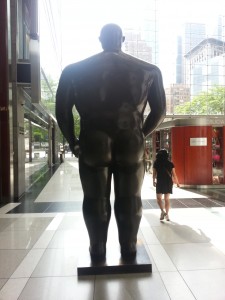
My Wednesday, as ever, begins with a journey to Columbus Circle, to breakfast with Linda, my dear agent, and her dog, Princess (currently being taken for walks in a stroller, due to a bad leg). Today there’s no follow-up appointment on the Upper West Side with my no less dear composer-colleague, who is attending to elderly parents. I descend from coffee with Linda to where the huge great absurd basaltic statue of a naked man occupies the lobby of the the Time Warner Building, a naked man with a tiny organ (decorously not shown here) and a tiny head. The tiny head I can understand, since we are clearly not developing intellectually, as a species.

Reefs of bedrock

Reefs of bedrock

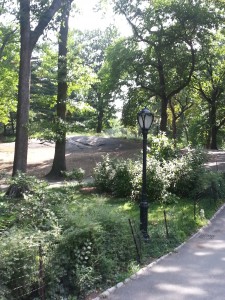
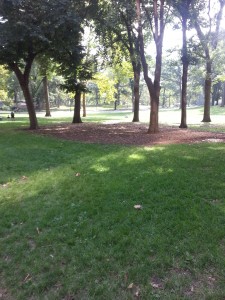
Blissful Central Park
Blissful Central Park

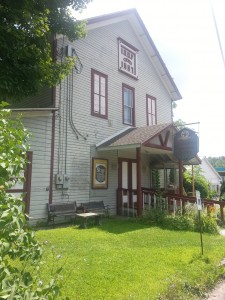
So instead of music with Jimmy, as we continue with our Hollywood musical, I sat for a while in Olmsted’s majestic Central Park, which I’ve been visiting for 65 years – daily at first between 1949 and ’52, when my school, the French Lycee, sent us there every morning (the park was at the end of our block). Its granite outcroppings, as I thought of the star-dusted reefs of rock that surge up all across the park and in upper Manhattan, mica-flecked as if from some celestial sea, have appeared in my dreams ever since. Technically this bedrock is glaciated schist, the ground-down remains of a mountain range a billion years old. Now the mountain range is a series of little bumps. But it’s still strong enough to hold up Manhattan.

Filed Under: Post, The City and the Country

The city and the country – 12 – Aug 3 2014

Shandaken Theatrical Society's sweet rural theater

Shandaken Theatrical Society’s sweet rural theater
Set for the Beethoven-play
Set for the Beethoven-play

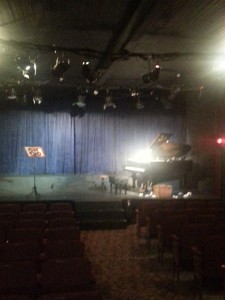
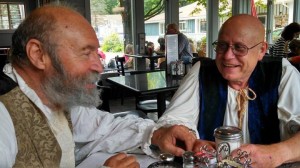
Much of the end of the week and the weekend spent in Phoenicia, where my Beethoven play opened on Friday at the Phoenicia International Festival of the Voice – a festival truly international (despite its almost comical yoking to the tiny hamlet of Phoenicia in upstate New York) by virtue of the host of internationally renowned singers gathered together by the festival’s organisers, Louis Otey and Maria Todaro – themselves internationally celebrated opera singers – and the no less international classical pianist Justin Kolb. The festival had turned Phoenicia, a sweet one-horse town whose tubing-trips in the Esopus rivers were hitherto its chief appeal, along with the Shandaken Theatrical Society where we performed the Beethoven play, into a sought-after cultural venue and a vacation site of exceptional charm, written up in magazines and newspapers and chosen by travel writers as a top ten destination. (When I first heard the title, Phoenicia International Festival, I recalled landing at Charleston, South Carolina’s International Airport, in its earliest days, when a flight to Raleigh, North Carolina was as far afield as it offered.) Like the Charleston International Airport, the Phoenicia festival rapidly grew into its name, and I feel greatly privileged to have taken part in the past 3 years. This year I persuaded the triumvirate to commission a play from me, one that would use Justin Kolb’s striking resemblance to Beethoven (picture him with a Beethoven wig on that head) combining it with the fruits of a book on Beethoven that Justin had lent me, about Beethoven’s incessant hypochondria. This inspired me to condense the great man’s many doctors into one long-suffering and imaginary figure, and make tender fun of a genius’s foibles, under the title, Seven Favorite Maladies of Ludwig van Beethoven. Central to the concept was the prospect of Justin playing some of Beethoven’s piano works – a lifelong passion, on Justin’s part – and mixing in dialogue to produce a perhaps previously unknown hybrid: a combined piano recital and comic drama, the drama interwoven into the recital (or vice versa).

With Justin, both of us in costume, at Brio, a Phoenicia eatery

With Justin, both of us in costume, at Brio, a Phoenicia eatery

To my relief it was well received by full houses, and no one complained (to my knowledge, anyway) that they would have preferred more recital and less of the play, or the other way around. I feel as if I got away with a tightrope walk (made more perilous by the fact that I played the other character, Beethoven’s doctor), and we learnt a great deal, chiefly thanks to Claire, the play’s director, about where it can be very much improved by re-working, for a future performances at other venues. A good prospect! – all we need is a space with a piano in it, plus the maestro and me.

Filed Under: Post, The City and the Country

« Previous Page
Next Page »

Search

BLOG ARCHIVE

© 2017 Carey Harrison · Site styled by Nan Tepper Design